The Living Theatre of Medieval Britain
When visitors witness the colourful pageantry of Ludlow's medieval Christmas celebration, they are experiencing far more than mere historical recreation. The mummers, minstrels, and jesters who populate the cobbled streets represent an unbroken chain of performance tradition that has endured for nearly a millennium, adapting and evolving whilst maintaining its essential character.
The origins of these entertainments lie deep within Britain's medieval past, when Christmas was not merely a religious observance but a raucous, community-wide celebration that lasted from Christmas Eve through to Twelfth Night. In an era before mass media or organised leisure, travelling performers provided the primary source of entertainment for both noble courts and common folk alike.
The Mysterious World of Medieval Mummers
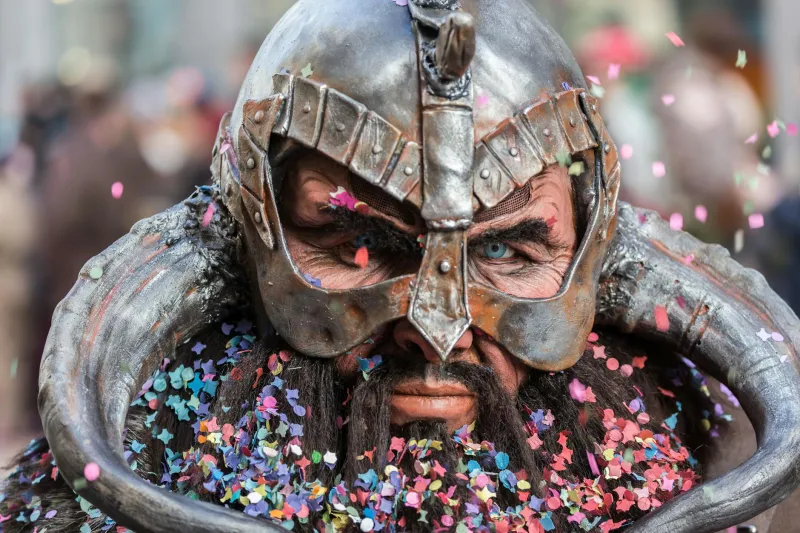
Perhaps no medieval entertainment tradition is more enigmatic than that of the mummers. These masked performers, whose name derives from the Middle English "momme" meaning to masquerade, travelled from house to house performing ritualistic plays that blended Christian themes with far older pagan customs.
Historical records from the 13th century describe mummers' plays as featuring stock characters including Saint George, the Turkish Knight, and a mysterious Doctor who could resurrect the dead. These performances, often accompanied by morris dancing and the collection of alms, served both as entertainment and as a means of ensuring community cohesion during the darkest months of winter.
Dr. Margaret Thornbury, a medieval historian who has consulted on Ludlow's celebration, explains: "The mummers' tradition represents one of Britain's oldest forms of folk theatre. What makes it remarkable is how it survived centuries of social upheaval, religious reformation, and cultural change. The plays performed at Ludlow today contain elements that would have been recognisable to audiences in medieval England."
Minstrels: The Medieval Media
Whilst mummers provided localised entertainment, minstrels served as the medieval world's primary means of communication and cultural exchange. These skilled performers travelled vast distances, carrying news, songs, and stories between communities that might otherwise remain isolated for months at a time.
The minstrel tradition encompassed a broad spectrum of entertainers, from humble jongleurs who juggled and told simple tales, to sophisticated troubadours who composed complex musical narratives for noble courts. Many specialised in particular forms: some were master storytellers who could recite epic poems from memory, others were accomplished musicians who played multiple instruments, and still others combined music with acrobatics or magic tricks.
Contemporary accounts from medieval chronicles describe Christmas celebrations where minstrels would perform continuously for days, their repertoires including everything from religious carols to bawdy comic songs. The tradition was so integral to medieval Christmas that many noble households maintained permanent minstrel companies specifically for the festive season.
Court Jesters: Wisdom Through Folly
The court jester, perhaps the most iconic of medieval entertainers, played a far more complex role than modern audiences might expect. These performers, granted unique licence to mock authority and speak uncomfortable truths, served as both entertainers and informal advisors to the powerful.
Jesters employed sophisticated wordplay, physical comedy, and musical performance to deliver social commentary that would have been dangerous from any other source. Their Christmas performances often included satirical takes on contemporary events, providing medieval audiences with a rare opportunity to laugh at their betters without fear of retribution.
The Survival of Ancient Traditions
The remarkable persistence of these performance traditions through centuries of social change speaks to their fundamental importance in British culture. Despite attempts by Puritan authorities to suppress such "frivolous" entertainments during the 17th century, and the massive social disruptions of industrialisation, elements of medieval performance culture survived in rural communities throughout Britain.
The Victorian era saw a romantic revival of interest in medieval traditions, though often in sanitised forms that bore little resemblance to their raucous originals. The 20th century brought more scholarly approaches to historical recreation, leading to the authentic reconstructions that modern audiences can experience at events like Ludlow's medieval Christmas.
Bringing the Past to Life
Tom Ashworth, a professional performer who has portrayed various medieval characters at Ludlow for over a decade, reflects on the enduring appeal of these ancient entertainments: "When I put on the costume of a medieval minstrel and begin to tell stories that have been passed down for centuries, I feel a direct connection to those original performers. The audience response is remarkably similar to what historical accounts describe – people still laugh at the same jokes, still gasp at the same dramatic moments."
The success of Ludlow's medieval Christmas celebration demonstrates that these ancient forms of entertainment retain their power to captivate and delight. In an age of digital entertainment and virtual experiences, there is something profoundly moving about witnessing live performers using techniques and telling stories that have entertained British audiences for nearly a thousand years.
A Living Heritage
As visitors to Ludlow's medieval Christmas encounter mummers in their elaborate masks, listen to minstrels weave tales of adventure and romance, and laugh at jesters' timeless wit, they participate in a cultural tradition that connects them directly to their medieval ancestors. These performances are not museum pieces but living traditions that continue to evolve whilst maintaining their essential character.
The medieval entertainments at Ludlow offer more than historical education – they provide a glimpse into the fundamental human need for storytelling, music, and laughter that transcends the centuries. In experiencing these ancient forms of revelry, modern audiences discover that the gap between past and present is perhaps not as wide as they might have imagined.