The Forgotten Stars of Medieval Entertainment
When visitors arrive at Ludlow's medieval Christmas celebration, their eyes naturally gravitate towards the thunderous clash of jousting tournaments and the regal processions of costumed nobility. Yet tucked into shadowy alcoves, bustling around market stalls, and weaving through the crowds are the true heartbeat of medieval entertainment: the humble yet essential performers who once brought joy to common folk during the darkest months of winter.
These entertainers—fire-eaters who brave the December chill, nimble tumblers who transform cobblestones into stages, and quick-witted jesters whose barbs cut through social pretence—represent an authentic slice of medieval life that historians often overlook in favour of grander narratives.
Fire and Fury: The Ancient Art of Flame Performance
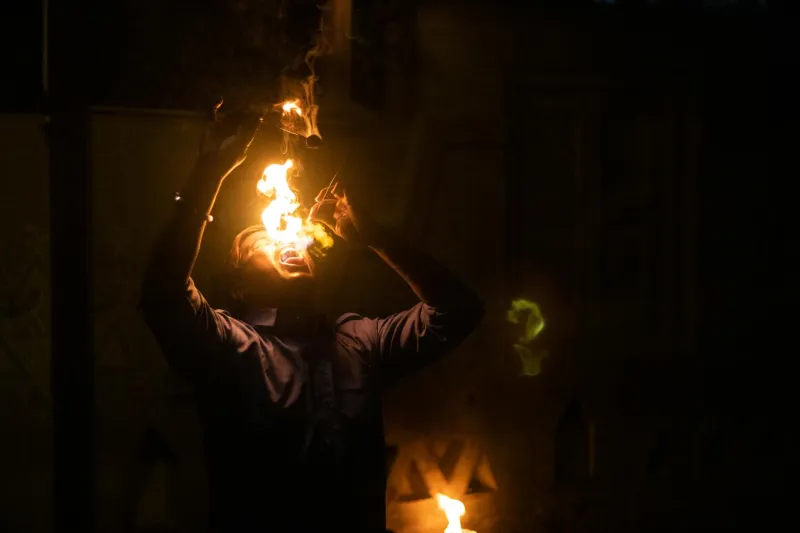
Perhaps nowhere is the raw spectacle of medieval entertainment more viscerally displayed than through fire performance. Modern visitors watching a flame-eater work their magic outside Ludlow Castle might assume they're witnessing a contemporary circus act, but fire entertainment has roots stretching deep into medieval tradition.
 Photo: Ludlow Castle, via www.ludlowcastle.com
Historical records from the 13th and 14th centuries describe travelling performers who would arrive at winter festivals bearing torches, breathing flames, and creating elaborate fire displays to ward off the symbolic darkness of the season. These weren't mere entertainers—they served a quasi-religious function, their performances echoing ancient rituals designed to ensure the sun's return.
At Ludlow's celebration, today's fire performers undergo extensive historical research to ensure their acts reflect authentic medieval techniques. Watch carefully, and you'll notice they use period-appropriate materials: hemp wicks soaked in animal fats rather than modern fuels, and iron braziers crafted using traditional blacksmithing methods.
The Tumbling Tradition: Acrobatics as Social Commentary
The acrobats and tumblers scattered throughout Ludlow's medieval streets serve a purpose far beyond simple entertainment. In medieval society, these performers occupied a unique social position—simultaneously celebrated and marginalised, welcomed for their skills yet viewed with suspicion for their nomadic lifestyle.
Medieval tumblers were master storytellers, using their physical prowess to comment on social hierarchies. A well-timed somersault could mock a pompous merchant, whilst a dramatic fall might symbolise the fickleness of fortune. Their performances were loaded with meaning that contemporary audiences would have understood instinctively.
Today's performers at Ludlow continue this tradition of social observation. Keep an ear open for their banter between acts—you'll often catch clever references to modern politics delivered with medieval flair, maintaining the tradition of the tumbler as social critic.
Court Jesters: Wisdom Wrapped in Folly
The jesters wandering Ludlow's medieval Christmas represent perhaps the most sophisticated form of historical entertainment on display. Far from simple comedians, medieval jesters served as unofficial advisors to nobility, using humour as a vehicle for truths too dangerous to speak directly.
A skilled jester could critique a lord's policies, expose social hypocrisy, or comment on current events—all whilst maintaining the protective veneer of entertainment. This delicate balance required exceptional intelligence, timing, and an intimate understanding of social dynamics.
Ludlow's modern jesters undergo rigorous training in medieval performance styles, learning not just period-appropriate jokes and riddles, but the subtle art of improvisation that made their historical counterparts so valuable. They study surviving texts of medieval jest books and work with historians to understand the social contexts that made certain humour effective.
Finding the Hidden Gems
Whilst major performances follow published schedules, the real magic of Ludlow's medieval entertainment happens spontaneously. The best way to discover these hidden performers is to wander without a fixed agenda, allowing the natural flow of the festival to guide your experience.
Look for small crowds gathering around seemingly empty spaces—often, a skilled performer will have drawn an audience through pure charisma. Listen for the sound of laughter echoing from unexpected corners, or follow the warm glow of torchlight down narrow passages.
Many of these performers work in pairs or small troupes, creating mini-dramas that unfold over the course of the day. A jester might establish a running joke with a particular merchant, building a narrative that culminates in an evening performance. Fire-eaters often coordinate with musicians to create impromptu spectacles that blend light, sound, and movement.
The Authentic Experience
What sets Ludlow's hidden performers apart from generic medieval entertainment is their commitment to historical accuracy. These aren't actors playing dress-up, but skilled craftspeople who've studied primary sources, learned period techniques, and developed deep respect for their historical counterparts.
This dedication creates moments of genuine time travel—instances where the boundary between past and present dissolves, and visitors find themselves experiencing something remarkably close to authentic medieval entertainment.
The next time you visit Ludlow's medieval Christmas, resist the urge to rush between scheduled events. Instead, allow time for serendipitous encounters with these remarkable performers. In their flames, tumbles, and jests, you'll discover the true spirit of medieval celebration—not in grand gestures, but in the intimate moments of human connection that transcend centuries.