Lights, Camera, Medieval Action: How Ludlow Became Britain's Favourite Period Drama Backdrop
Step into Ludlow during the Medieval Christmas celebration, and you're not just entering a historical market town—you're walking onto one of Britain's most frequently used film sets. This remarkably preserved Shropshire gem has provided the backdrop for countless productions, from major Hollywood films to intimate television dramas, all drawn by the town's extraordinary collection of authentic medieval architecture that requires minimal digital enhancement to transport audiences back in time.
The Castle That Launched a Thousand Scenes
Ludlow Castle stands as the undisputed star of the town's cinematic portfolio. Its imposing Norman keep and remarkably intact great hall have doubled for royal residences across medieval Europe in productions spanning six decades. The castle's most famous moment came during the filming of 'The Princess Bride' in 1987, when its outer bailey served as the courtyard of Prince Humperdinck's castle.
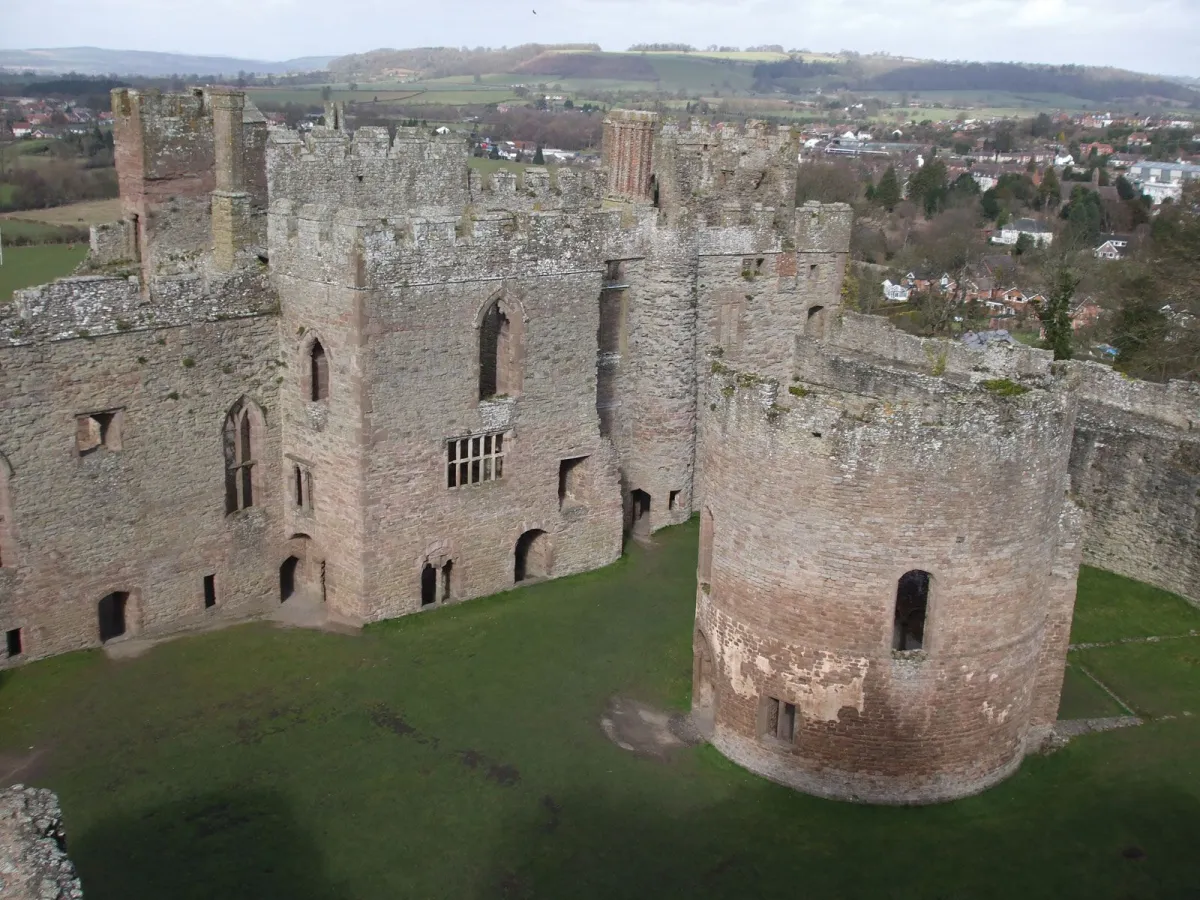 Photo: Ludlow Castle, via cdn.britannica.com
What makes Ludlow Castle particularly attractive to location scouts is its authentic decay—the romantic ruins provide genuine medieval atmosphere without the restrictions that come with fully operational heritage sites. The castle's various architectural periods, from Norman foundations to Tudor additions, offer filmmakers multiple historical backdrops within a single location.
During your Christmas festival visit, look for the distinctive archway where Westley and Inigo Montoya's sword fight was choreographed, though ultimately filmed elsewhere. The castle's inner bailey frequently hosts Christmas performances, allowing visitors to experience the same dramatic spaces that have thrilled cinema audiences worldwide.
The Streets That Time Forgot
Ludlow's medieval street pattern, largely unchanged since the 13th century, provides something increasingly rare in British filmmaking—genuine medieval urban landscapes that require minimal set dressing. Broad Street, with its remarkable collection of timber-framed buildings, has appeared in dozens of productions, often standing in for much larger medieval cities.
The BBC's acclaimed series 'Wolf Hall' made extensive use of Ludlow's streetscape, with the town doubling for various English market towns during Thomas Cromwell's rise to power. Sharp-eyed viewers can spot the distinctive Feathers Hotel façade in several episodes, though it appeared with carefully applied artificial weathering to suggest greater age.
Perhaps most famously, Ludlow's streets provided key locations for 'Shakespeare in Love', with several timber-framed buildings along Mill Street serving as Elizabethan London. The production team was particularly impressed by the town's lack of modern intrusions—few locations in Britain offer such extensive medieval streetscapes without the visual pollution of satellite dishes, modern shopfronts, or contemporary road markings.
The Church That Echoes Through Time
St Laurence's Church, with its soaring perpendicular Gothic architecture, has provided sacred backdrops for numerous period productions. Its remarkable misericords—medieval choir stalls carved with intricate scenes of daily life—have been featured in documentaries about medieval craftsmanship, whilst the church's impressive dimensions have doubled for cathedral interiors in several major productions.
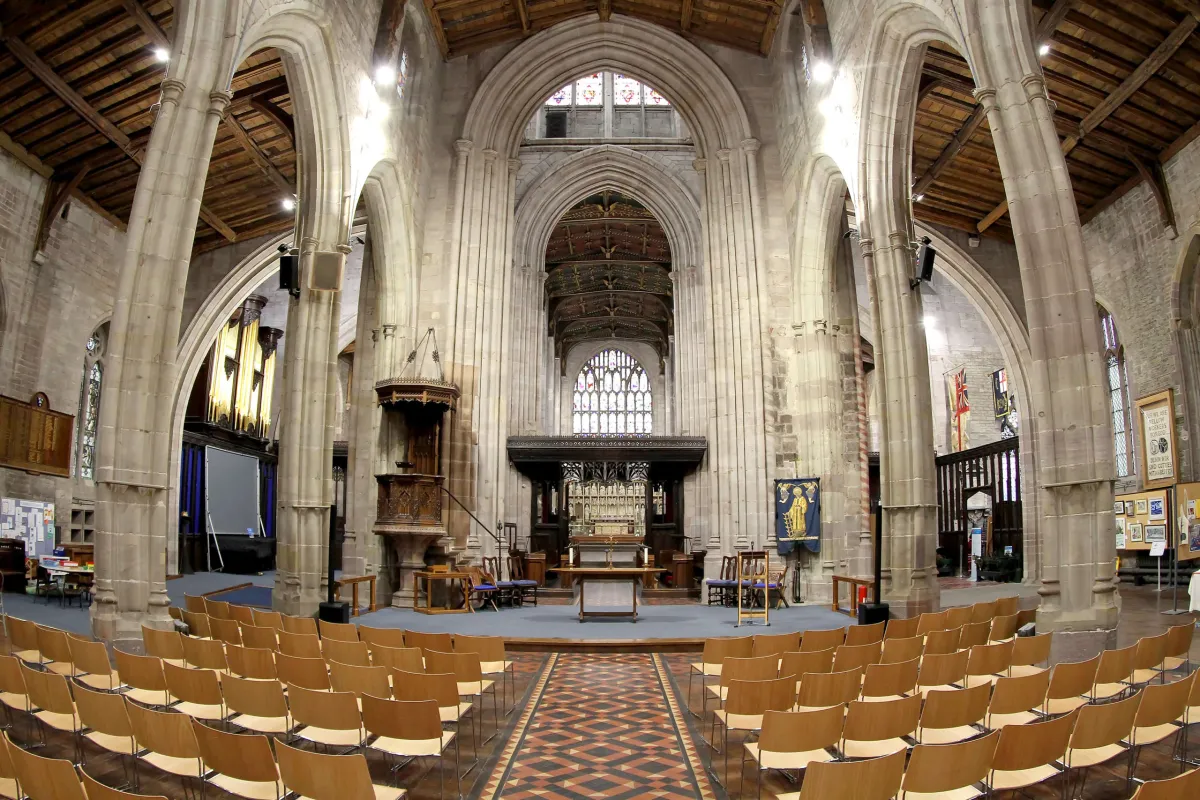 Photo: St Laurence's Church, via stlaurences.org.uk
The church's most memorable cinematic moment came during the filming of 'A Man for All Seasons', when its nave served as the setting for Thomas More's final prayers. The production team was particularly drawn to the church's authentic medieval atmosphere, enhanced by centuries of continuous worship that have preserved its spiritual ambiance.
During the Christmas festival, visitors can attend services in the same spaces that have moved cinema audiences, experiencing the acoustic properties that make the church such a favourite with sound engineers recording period music and dialogue.
Hidden Gems and Secret Locations
Beyond the obvious landmarks, Ludlow's appeal to filmmakers lies in its collection of lesser-known medieval spaces that provide intimate settings for dramatic scenes. The Reader's House on Broad Street, with its distinctive oriel window, has appeared in numerous productions as a wealthy merchant's dwelling, whilst the town's medieval gates have served as dramatic entry points in everything from Arthurian romances to Tudor dramas.
The Ludlow Museum, housed in a medieval building that once served as the town's assembly rooms, has provided period interiors for productions requiring authentic medieval domestic spaces. Its collection of medieval artefacts often remains in shot, providing genuine historical details that would be expensive to recreate elsewhere.
One of the town's best-kept secrets is the medieval undercroft beneath several Broad Street buildings, which has served as everything from medieval storage spaces to dungeon cells in various productions. These atmospheric stone-vaulted chambers, still used by local businesses, provide filmmakers with authentic medieval interiors that would be impossible to construct on studio sets.
The Modern Industry Behind Medieval Magic
Ludlow's success as a filming location has created a small but thriving local industry supporting television and film production. Local businesses have developed expertise in accommodating film crews, whilst residents have become accustomed to the sight of period-costumed actors walking medieval streets that seem designed for such performances.
The town council actively promotes Ludlow as a filming destination, maintaining a database of suitable locations and streamlining the permissions process that can complicate filming in other historic towns. This professional approach has established Ludlow as a reliable choice for productions working to tight schedules and budgets.
Several local residents have found regular work as extras, their familiarity with medieval costume and customs making them valuable additions to period productions. During the Christmas festival, some of these experienced performers contribute to the historical authenticity that draws both filmmakers and visitors to the town.
Your Cinematic Treasure Hunt
The Christmas festival provides the perfect opportunity for a self-guided tour of Ludlow's filming locations. Armed with knowledge of the town's cinematic history, visitors can transform their festival experience into a treasure hunt for famous locations.
Start at the castle, where the great hall's impressive dimensions and authentic medieval details have provided backdrops for royal scenes in numerous productions. The view from the castle's towers, looking down over the town's medieval roofscape, has appeared in establishing shots for dozens of films and television programmes.
Wander down Castle Street, where the mixture of medieval and Tudor buildings has provided versatile backdrops for productions spanning several historical periods. The street's gentle curve and varied architectural styles create natural framing for dramatic scenes.
End your cinematic tour in the market square, where the town's medieval market cross and surrounding timber-framed buildings have hosted everything from medieval markets to Tudor executions in various productions. During the Christmas festival, the square buzzes with activity that echoes its cinematic appearances whilst providing authentic medieval atmosphere.
The Future of Ludlow's Screen Legacy
As demand for authentic historical locations continues to grow, Ludlow's cinematic future looks bright. The town's combination of architectural authenticity, professional support services, and enthusiastic local community makes it an increasingly attractive alternative to more expensive and restrictive filming locations.
Recent productions have begun to appreciate not just Ludlow's medieval credentials but its broader historical range, with Tudor and Georgian buildings providing backdrops for productions spanning several centuries of British history.
For visitors to the Medieval Christmas celebration, this cinematic heritage adds an extra dimension to the festival experience. Walking through streets that have hosted some of Britain's most beloved period dramas, shopping in markets that have appeared on cinema screens worldwide, and celebrating Christmas in locations that have moved audiences across the globe creates a unique blend of historical authenticity and contemporary culture that perfectly captures Ludlow's enduring appeal.
Whether you're a film enthusiast hunting for famous locations or simply a festival visitor curious about the town's hidden stories, Ludlow's cinematic legacy provides a fascinating subplot to the main event of medieval Christmas celebration, reminding us that some places are so authentically historical they need no artificial enhancement to transport us back in time.