The Quiet Revolution That Nobody Saw Coming
Whilst heritage tourism experts debated strategies in London conference rooms, something remarkable was happening in a medieval market town tucked away in the Shropshire hills. Ludlow Medieval Christmas was quietly pioneering approaches that would reshape how Britain thinks about immersive historical experiences. Today, from Yorkshire's medieval festivals to Cornwall's historical celebrations, the influence of Ludlow's innovations can be traced through the DNA of countless heritage events.
What began as a local celebration has evolved into an unlikely blueprint for heritage tourism success, studied by destination managers from Edinburgh to Canterbury. The festival's influence extends far beyond its immediate economic impact on Shropshire—it has fundamentally altered how British towns approach historical tourism during the traditionally quiet winter months.
Pioneering the Community-Led Programming Model
Ludlow's most significant innovation was recognising that authentic historical recreation required genuine community involvement, not just professional performers. This insight seems obvious now, but it represented a radical departure from the top-down heritage programming that dominated British tourism in the early 2000s.
The festival's approach of training local residents in historical skills—from medieval cooking techniques to period-appropriate crafts—created a sustainable model that other destinations have eagerly adopted. Rather than importing expensive professional re-enactors, Ludlow demonstrated that communities could develop their own expertise whilst maintaining authentic standards.
This community-led approach has been replicated across Britain, from Warwick's medieval weekends to Chester's Roman festivals. Tourism boards now routinely cite Ludlow's model when developing heritage programming strategies, recognising that community involvement creates both authenticity and economic sustainability.
Setting New Standards for Historical Accuracy
Before Ludlow Medieval Christmas established its reputation, many British heritage events prioritised entertainment over accuracy, resulting in historically confused experiences that frustrated serious enthusiasts whilst failing to educate casual visitors. Ludlow's insistence on research-based programming changed industry expectations entirely.
The festival's commitment to archaeological evidence and primary historical sources established new benchmarks for heritage tourism authenticity. Other destinations found themselves under pressure to match Ludlow's standards, leading to improved historical accuracy across the sector.
This influence extends beyond medieval festivals. Roman, Tudor, and Victorian heritage events nationwide now routinely reference Ludlow's research methodologies when developing their own programming. The festival's approach of making historical accuracy accessible to general audiences has become the gold standard for British heritage tourism.
Transforming Winter Tourism Economics
Perhaps Ludlow's most revolutionary contribution was demonstrating that winter heritage tourism could be economically viable. Before the festival's success, most British heritage destinations wrote off November through February as dead seasons, accepting reduced visitor numbers and limited programming.
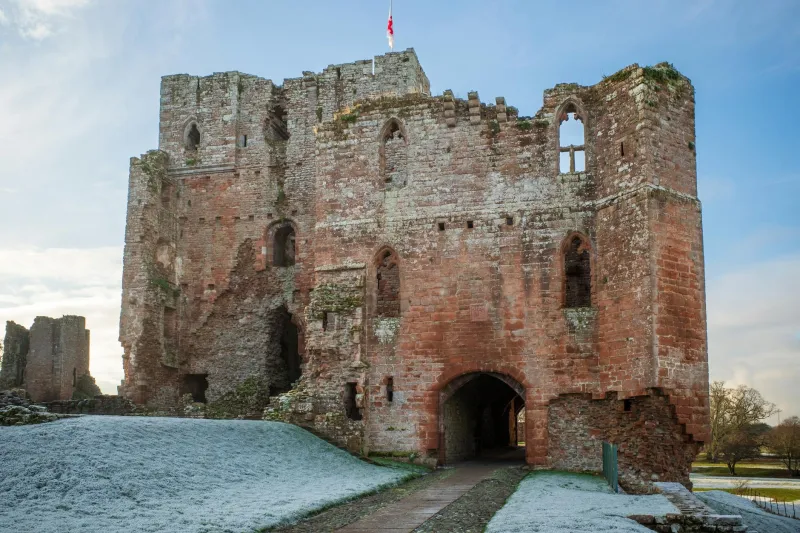
Ludlow proved that winter could be a heritage tourism advantage rather than obstacle. The festival's atmospheric use of winter weather—from snow-dusted castle walls to the cosy warmth of medieval hearths—showed how seasonal conditions could enhance rather than hinder historical immersion.
This insight has transformed winter programming across Britain. Heritage destinations from Hadrian's Wall to Stonehenge now develop winter-specific experiences, recognising that atmospheric weather can create more memorable historical connections than perfect summer conditions.
The Costume Revolution: From Fantasy to Forensics
Ludlow's approach to period costume has influenced heritage tourism standards across Britain. The festival's emphasis on historically accurate clothing—based on archaeological evidence rather than Hollywood interpretations—raised visitor expectations and challenged other events to improve their costume standards.
The festival's costume guidelines, developed in consultation with medieval textile experts, have been adopted by heritage events throughout the UK. Tourism managers regularly cite Ludlow's costume policies when establishing their own historical accuracy standards.
This influence extends to heritage retail as well. The success of Ludlow's historically accurate costume market has inspired similar retail approaches at heritage sites nationwide, creating a new sector within British tourism focused on authentic historical goods.
Redefining Heritage Site Activation
Ludlow pioneered the concept of using entire town centres as immersive historical environments, rather than confining heritage activities to specific sites or buildings. This town-wide activation model has been studied and replicated by destinations across Britain.
The festival's integration of multiple venues—from Ludlow Castle to parish churches, from market squares to private courtyards—demonstrated how heritage tourism could benefit entire communities rather than single attractions. This approach has influenced heritage tourism strategies from Bath to York.
Urban planners and heritage managers now routinely reference Ludlow's activation model when developing tourism strategies for historic town centres. The festival's success in combining commercial activity with historical programming has become a template for sustainable heritage tourism development.
Educational Innovation That Others Follow
Ludlow's approach to heritage education—making medieval history accessible without dumbing it down—has influenced educational programming across the heritage sector. The festival's success in engaging both children and adults with complex historical concepts has been studied by heritage educators nationwide.
The festival's educational methodologies, particularly its hands-on approach to historical skills teaching, have been adopted by heritage sites from Warwick Castle to the Tower of London. Education officers regularly visit Ludlow to observe techniques they can adapt for their own programmes.
The Network Effect: Industry-Wide Transformation
The festival's influence operates through professional networks as well as direct observation. Heritage tourism professionals who have worked on Ludlow Medieval Christmas have carried its innovations to positions across Britain, spreading its approaches through the industry.
This professional migration has accelerated the adoption of Ludlow's innovations, with former festival staff now managing heritage programmes from Scotland to Devon. The festival has effectively trained a generation of heritage tourism professionals who understand its methods and continue implementing them elsewhere.
Recognition and Validation
The heritage tourism industry has formally recognised Ludlow's innovations through numerous awards and case study citations. VisitBritain has highlighted the festival as an exemplar of best practice, whilst heritage tourism conferences regularly feature presentations analysing its success.
Academic research has validated the festival's approaches, with tourism studies programmes using Ludlow as a case study for successful heritage destination management. This academic recognition has further legitimised the festival's innovations and encouraged their adoption elsewhere.
The Continuing Influence
As British heritage tourism continues evolving, Ludlow's influence remains visible in emerging trends. The festival's early adoption of social media for heritage marketing, its integration of contemporary accessibility needs with historical accuracy, and its sustainable approach to heritage programming continue inspiring industry developments.
For regular festival visitors, understanding this broader influence adds pride to their experience. They're not just attending a charming local celebration—they're participating in an event that has quietly revolutionised how Britain approaches its medieval heritage. The festival they love has become a template that helps preserve and celebrate historical traditions across the nation, ensuring that medieval Britain's legacy remains accessible for future generations.