The Sacred Foundation of Medieval Yuletide
When we witness the candlelit processions and hear the ancient hymns echoing through Ludlow's medieval streets during the Christmas festival, we are experiencing echoes of a profound spiritual tradition that shaped not merely religious observance, but the very fabric of medieval society. The Catholic Church's influence on Christmas celebrations in 13th to 15th century England was so complete that it would be impossible to understand medieval festivity without grasping its sacred foundations.
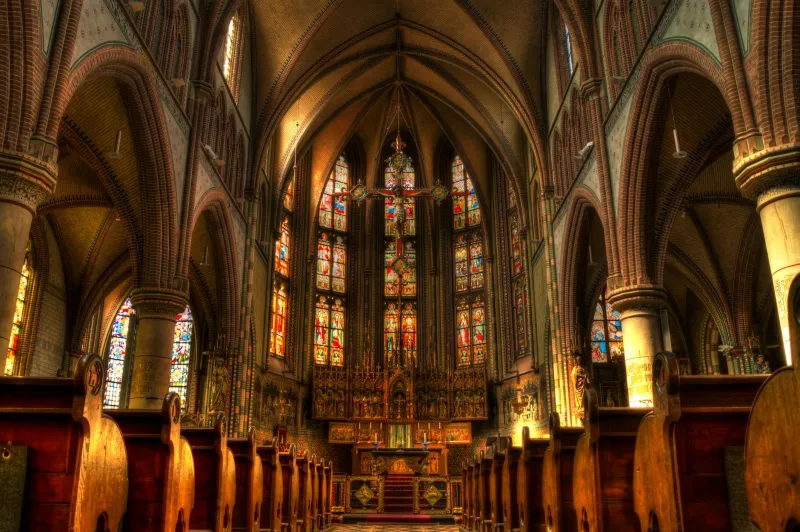
In medieval Ludlow, Christmas was not a single day but a season of sacred observance stretching from Advent through to Candlemas in February. The rhythm of this extended celebration was dictated entirely by the Church calendar, creating a framework that governed everything from market schedules to social gatherings. St Laurence's Parish Church, with its magnificent medieval architecture still standing today, would have served as the beating heart of these celebrations.
From Vigil to Victory: The Sacred Cycle
The medieval Christmas experience began not with gift-giving or feasting, but with the solemn preparation of Advent. During these four weeks, the faithful of Ludlow would observe periods of fasting and reflection, attending daily masses that grew increasingly elaborate as Christmas approached. The church bells that still ring across the town today would have marked not only the hours but the spiritual progression towards the most sacred night of the year.
Christmas Eve brought the most profound of medieval traditions: the midnight vigil. Families would gather in St Laurence's Church for a service that began in darkness and culminated with the first light of Christmas morning. Imagine the flickering candlelight casting dancing shadows on the ancient stone walls, the haunting melodies of Gregorian chant filling the air, and the entire community united in prayer and anticipation.
The transition from this sacred solemnity to Christmas Day celebration reveals the genius of medieval Christianity's approach to human nature. The Church recognised that spiritual devotion and communal joy were not opposing forces but complementary aspects of faith.
The Feast of Fools: Sacred Rebellion
Perhaps nowhere is this understanding more evident than in the extraordinary tradition of the Feast of Fools, typically celebrated on the Feast of the Holy Innocents (28th December) or during the twelve days of Christmas. This remarkable celebration turned the normal social order completely upside down, with servants commanding masters, children leading adults, and the lowliest members of society taking positions of mock authority.
What might seem like chaos was actually carefully orchestrated by the Church itself. These inversions served multiple purposes: they provided a safety valve for social tensions, reminded the powerful of their Christian duty to humility, and celebrated the revolutionary message of the Nativity story itself – that God chose to be born not in a palace but in a stable.
In medieval Ludlow, the Feast of Fools would have seen apprentices parading through the market square in mock procession, perhaps led by a 'Boy Bishop' chosen from the local children. The wealthy merchants and guild masters would have participated willingly, understanding that this temporary reversal actually reinforced the social order by making it appear divinely sanctioned rather than merely conventional.
The Living Theatre of Faith
The medieval Church was masterful at creating experiences that engaged all the senses and emotions. Christmas celebrations included elaborate mystery plays performed on the steps of St Laurence's Church or in the castle grounds. These dramatic presentations of the Nativity story, the journey of the Magi, and the slaughter of the innocents brought biblical narratives to vivid life for a largely illiterate population.
These weren't mere entertainments but powerful tools of religious instruction and community bonding. The entire town would participate, with local craftsmen building sets, merchants providing costumes, and citizens of all ages taking roles. The line between performer and audience dissolved as the community collectively recreated the sacred stories that defined their faith.
Echoes in Today's Celebration
Ludlow's modern Christmas festival brilliantly captures this integration of sacred and secular, solemn and celebratory. When visitors witness the torch-lit processions through the medieval streets, they are experiencing a direct descendant of those ancient vigil processions. The carol singing that fills the air echoes the medieval tradition of wassailing, where communities would travel from house to house sharing songs and good wishes.
The festival's emphasis on community participation, historical authenticity, and the blending of entertainment with education reflects the medieval Church's understanding that the most profound truths are best communicated through shared experience rather than mere instruction.
The Enduring Legacy
What emerges from studying the Church's role in medieval Christmas is not a picture of grim religious observance but of a sophisticated understanding of human nature and community needs. The medieval Church created a framework that honoured the sacred while celebrating the human, that maintained social order while providing outlets for creative expression and temporary rebellion.
Today's visitors to Ludlow's Christmas celebration experience this same integration. They witness the profound alongside the playful, the historical alongside the immediate, the sacred alongside the secular. In doing so, they connect not only with the medieval past but with enduring truths about community, celebration, and the human need for both reverence and joy.
The bells of St Laurence's Church still ring out over Ludlow's Christmas festival, just as they did seven centuries ago, calling the community together in celebration of traditions that have proved more enduring than any earthly power.