Embracing Your Medieval Persona at Ludlow's Christmas Festivities
Stepping into Ludlow's Medieval Christmas celebration without period costume is rather like attending a wedding in casual attire—whilst not forbidden, you'll certainly feel out of place amongst the sea of doublets, wimples, and flowing cloaks. The transformation from modern visitor to medieval character enhances not merely your photographs, but your entire experience of this remarkable historical celebration.
Whether you're planning your first visit or returning as a seasoned enthusiast, selecting appropriate medieval attire requires careful consideration of both historical accuracy and practical comfort. The cobbled streets of Ludlow demand sturdy footwear, whilst December's chill necessitates warm layers beneath your chosen ensemble.
Understanding Medieval Social Classes Through Costume
The medieval period encompassed a rigid social hierarchy, reflected distinctly in clothing choices. Understanding these distinctions helps visitors select costumes that align with their preferred character whilst respecting historical authenticity.
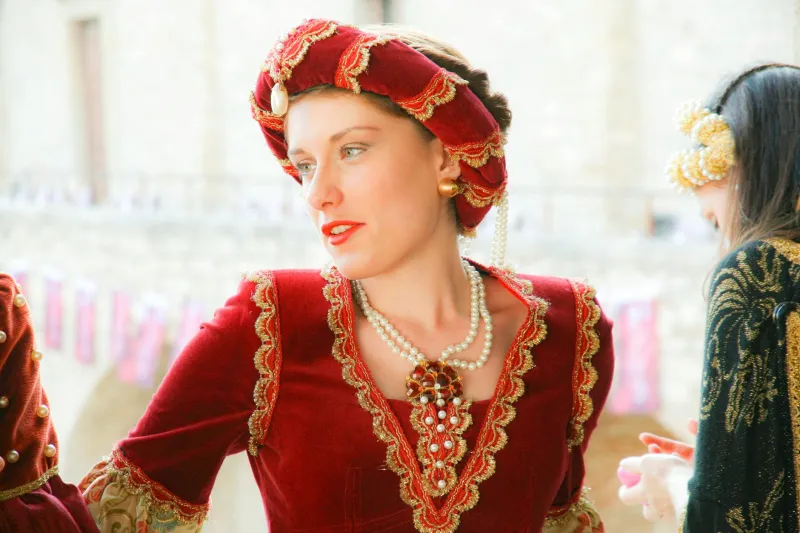
Noble Classes: Lords, ladies, and wealthy merchants adorned themselves in rich fabrics such as velvet, silk, and fine wool. Deep jewel tones—burgundy, emerald, and sapphire—dominated their wardrobes. Ladies typically wore fitted bodices with flowing skirts, often accompanied by elaborate headdresses or circlets. Gentlemen favoured doublets with hose, complemented by fur-trimmed cloaks and leather boots.
Merchant Classes: The emerging middle class displayed their prosperity through quality fabrics in more subdued colours. Merchants' wives might wear wool gowns in forest green or deep brown, whilst their husbands donned practical tunics with leather belts and pouches for conducting business.
Common Folk: Peasants and craftspeople wore simple, practical garments in undyed wool or linen. Earth tones—brown, grey, and cream—predominated their clothing. Women typically wore simple kirtles with aprons, whilst men donned tunics with braies (medieval undergarments) and woollen stockings.
Professional Costume Hire Services Across the UK
For visitors seeking high-quality, historically accurate costumes without the commitment of purchase, numerous UK-based hire services specialise in medieval attire.
Angels Costumes (London and online) offers an extensive medieval collection, from peasant garb to royal regalia. Their pieces feature authentic details such as hand-stitched seams and period-appropriate fastenings. Rental periods typically span one week, with delivery available throughout the UK.
Costume Studio (Birmingham) provides bespoke fitting services alongside their rental collection. Particularly renowned for their noble-class costumes, they offer accessories including crowns, jewellery, and ceremonial weapons to complete your transformation.
Medieval Collectibles maintains an online presence with physical locations across England. Their rental programme includes educational materials about each costume's historical context, perfect for enthusiasts seeking authenticity.
Regional Theatre Companies often rent costumes during off-seasons. Contact local amateur dramatic societies or professional theatres near your location—many maintain extensive period wardrobes available for hire.
Creating Your Own Medieval Ensemble
Crafting period-appropriate costumes offers both creative satisfaction and cost-effectiveness, particularly for families planning regular attendance at historical events.
Essential Materials: Natural fibres—wool, linen, and cotton—provide authenticity whilst offering comfort and durability. Avoid synthetic fabrics, which appear distinctly modern under scrutiny. Fabric shops across the UK stock suitable materials, with online retailers offering period-specific patterns.
Simple Starting Projects: Begin with basic tunics or kirtles using commercial patterns from companies like Butterick or Simplicity. These foundational garments require minimal sewing experience whilst providing authentic medieval silhouettes.
Accessories and Details: Transform modern clothing with period accessories. Leather belts, simple brooches, and woollen cloaks can medievalise contemporary garments effectively. Craft stores stock materials for creating circlets, pouches, and other medieval accessories.
Footwear Considerations: Authentic medieval shoes prove challenging to source and often uncomfortable for extended wear. Modern leather boots in brown or black provide practical alternatives whilst maintaining period appearance.
Balancing Historical Accuracy with Festive Spirit
Ludlow's Medieval Christmas celebration welcomes both scholarly accuracy and imaginative interpretation. Whilst purists may favour meticulously researched ensembles, families often prefer combining historical elements with festive creativity.
Historical Accuracy: Research specific time periods and social classes to create authentic representations. Medieval clothing evolved significantly between the 11th and 15th centuries, with distinct regional variations across Europe.
Festive Adaptations: Incorporate Christmas elements through colour choices—rich reds and greens—or accessories such as holly wreaths or mistletoe sprigs. These additions enhance the festive atmosphere whilst maintaining medieval aesthetics.
Weather Considerations: December in Shropshire demands practical layering. Wool cloaks, lined bodices, and sturdy boots ensure comfort throughout the day's festivities. Consider bringing modern thermals to wear beneath period garments.
Practical Tips for First-Time Costume Wearers
Wearing medieval costume requires adjustment from contemporary clothing. Long skirts demand careful navigation of stairs and uneven surfaces, whilst flowing sleeves can catch on obstacles. Practice wearing your chosen outfit beforehand to identify potential challenges.
Plan for photography opportunities by selecting costumes that photograph well in natural light. Rich colours and interesting textures create striking images against Ludlow's medieval architecture.
Consider the day's activities when selecting costumes. Participating in archery demonstrations or craft workshops may require modified garments or protective accessories.
Enhancing Your Medieval Experience
Appropriate costume serves as a gateway to deeper historical engagement. Visitors dressed in period attire often find themselves naturally adopting medieval mannerisms and speech patterns, creating more immersive experiences for themselves and others.
Consider researching your chosen character's background—their occupation, social status, and daily life. This knowledge enriches interactions with other costumed participants and enhances appreciation for the historical period.
Remember that costume quality varies significantly. Whilst professional-grade ensembles offer superior authenticity, enthusiastic participation matters more than perfect accuracy. Ludlow's Medieval Christmas welcomes all visitors seeking to step back in time, regardless of their costume's provenance or historical precision.