The Evidence Behind Experiential Education
Recent educational studies conducted across British schools reveal a remarkable pattern: children who attend immersive historical events like Ludlow's Medieval Christmas demonstrate significantly improved performance in history assessments, enhanced retention of historical facts, and increased enthusiasm for learning about the past. This isn't merely anecdotal observation but documented evidence that's reshaping how educators approach history teaching.
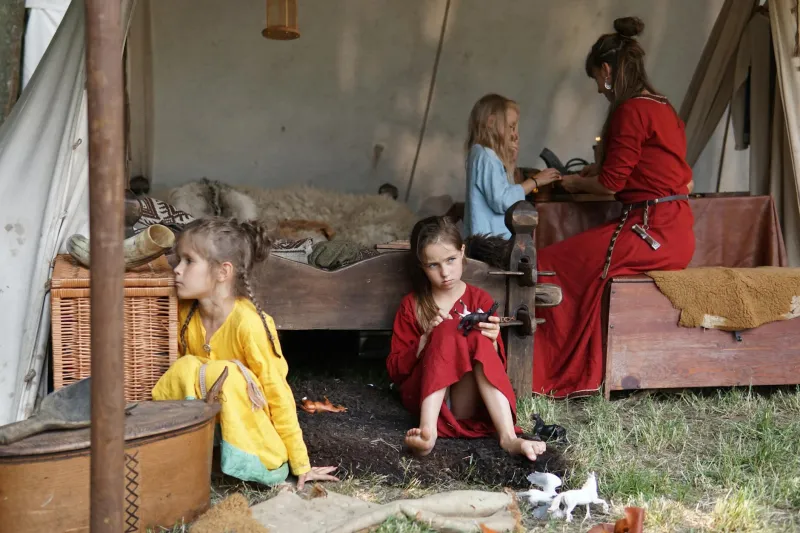
 Photo: Ludlow's Medieval Christmas, via i.pinimg.com
Dr. Sarah Mitchell, a primary education specialist at Birmingham University, has tracked student performance before and after heritage site visits for three years. Her research shows that pupils who experience living history demonstrations score an average of 23% higher on subsequent historical knowledge tests compared to peers who receive only traditional classroom instruction.
 Photo: Dr. Sarah Mitchell, via d2dl4wi9c2tbm3.cloudfront.net
"The difference isn't just in test scores," Dr. Mitchell explains. "Children who attend events like Ludlow's festival demonstrate deeper understanding of historical concepts. They grasp the connections between past and present, understand the complexity of historical periods, and most importantly, they develop genuine curiosity about history that extends far beyond curriculum requirements."
Why Medieval Festivals Work Where Textbooks Fail
Traditional history education relies heavily on abstract concepts delivered through textbooks and lectures. Children read about medieval life but struggle to comprehend the reality of living without electricity, central heating, or modern conveniences. Ludlow's Medieval Christmas transforms these abstract concepts into tangible experiences that engage multiple senses simultaneously.
When children watch blacksmiths forge tools, smell bread baking in medieval ovens, and hear authentic period music, they're not just learning facts—they're building comprehensive understanding through direct sensory experience. This multi-sensory approach activates different areas of the brain, creating stronger neural pathways that enhance both immediate comprehension and long-term retention.
James Crawford, head teacher at Telford Primary School, has organised annual trips to Ludlow's festival for five years. "The transformation in our pupils is immediate and lasting," he observes. "Children who showed little interest in history become passionate advocates for learning about the past. They ask questions, make connections, and demonstrate understanding that simply wasn't possible through classroom teaching alone."
The Social Learning Dimension
Medieval festivals provide unique opportunities for collaborative learning that classroom environments struggle to replicate. Children naturally form groups to explore different aspects of the festival, sharing discoveries and building knowledge collectively. This peer-to-peer learning reinforces individual understanding while developing crucial social skills.
The interactive nature of Ludlow's festival encourages children to engage directly with costumed interpreters, asking questions and receiving immediate, personalised responses. This direct communication with "historical figures" creates memorable learning moments that children reference months or even years later.
Research by the Heritage Education Trust demonstrates that children who participate in interactive historical experiences develop stronger empathy and cultural understanding. By engaging with representations of people from different time periods, they begin to appreciate the complexity of human experience across history.
Breaking Down Classroom Barriers
Traditional education often compartmentalises subjects, teaching history separately from science, literature, or art. Medieval festivals naturally integrate these disciplines, demonstrating how historical societies combined practical skills, artistic expression, and scientific knowledge in daily life.
At Ludlow's festival, children simultaneously learn about medieval chemistry through demonstrations of dyeing and brewing, medieval engineering through castle architecture and siege weapons, medieval literature through storytelling and drama, and medieval music through authentic performances. This integrated approach mirrors how people actually lived and learned in historical periods.
Mary Thompson, a Year 6 teacher from Worcester, notes: "Our pupils return from Ludlow with enthusiasm for subjects they'd never connected to history before. They want to learn about medieval medicine, which leads to science discussions. They're interested in medieval poetry, which enhances their English studies. The festival creates connections that enrich their entire educational experience."
Addressing Different Learning Styles
Classroom instruction typically favours auditory and visual learners, potentially leaving kinesthetic learners at a disadvantage. Medieval festivals accommodate all learning preferences by providing multiple ways to engage with historical content.
Kinesthetic learners thrive on the physical activities available at Ludlow's festival—handling replica tools, trying on period costumes, and participating in traditional dances. Visual learners benefit from elaborate costumes, authentic architecture, and detailed craft demonstrations. Auditory learners engage with period music, storytelling, and the rich soundscape of a medieval marketplace.
This inclusive approach ensures that every child finds entry points into historical learning that match their natural preferences and strengths.
The Long-Term Impact on Historical Thinking
Educators report that festival experiences fundamentally change how children approach historical study. Rather than viewing history as a collection of dates and facts to memorise, they begin to understand it as the study of real people facing recognisable human challenges.
Children who attend medieval festivals develop what historians call "historical empathy"—the ability to understand past events from the perspective of people who lived through them. This sophisticated thinking skill typically develops much later in traditional educational approaches but emerges naturally when children experience immersive historical environments.
The questioning skills that children develop during festival visits transfer directly to classroom learning. Teachers report that pupils who attend events like Ludlow's festival ask more sophisticated questions, challenge assumptions, and demonstrate critical thinking that enhances all areas of their education.
Practical Implementation for Schools
Successful educational visits to medieval festivals require careful preparation and follow-up activities that maximise learning impact. Teachers who achieve the best results prepare students with background knowledge before the visit, provide structured activities during the festival, and create opportunities for reflection and extension afterwards.
Pre-visit preparation might include studying maps of medieval Ludlow, researching daily life in the Middle Ages, and discussing what students hope to discover. During the festival, structured worksheets or photo assignments help focus attention on specific learning objectives while allowing flexibility for spontaneous discoveries.
Post-visit activities extend the learning impact through creative projects, research assignments, and opportunities to share experiences with other classes. Many schools create medieval-themed displays, write historical fiction based on festival experiences, or organise their own mini-medieval events.
The Broader Educational Revolution
The success of heritage site learning reflects a broader shift in educational philosophy toward experiential and place-based learning. As educators recognise the limitations of purely academic approaches, immersive experiences like Ludlow's Medieval Christmas represent the future of effective history education.
This transformation extends beyond individual student benefits to reshape entire school approaches to curriculum delivery. Schools that embrace heritage site learning often develop stronger community connections, enhanced parent engagement, and improved student motivation across all subjects.
The evidence is clear: medieval festivals like Ludlow's Christmas celebration aren't educational luxuries but essential tools for creating the kind of deep, lasting learning that prepares children for lifelong engagement with history and culture. As more schools recognise this potential, heritage experiences will become standard rather than exceptional elements of British education.